
Despite affecting up to 8 out of 10 women, uterine fibroids remain severely under-researched. That needs to change.
Start your own fundraiser or make a donation to fund research that advances solutions for the millions of women with fibroids worldwide.
Your donations are tax-deductible in the US.
The challenge with fibroids is that they are invisible to the naked eye. Treatment options remain limited and are often extremely invasive, and education about how they impact quality of life and fertility is shockingly sparse.
#MakeFibroidsCount invites you to become part of the solution. Every dollar for research makes a difference. Every story breaks the silence. Every post challenges the status quo.


Donate to the FWH x Lupita Nyong'o Uterine Fibroid Grant. Your donation funds research to find solutions for the millions of women with fibroids worldwide.

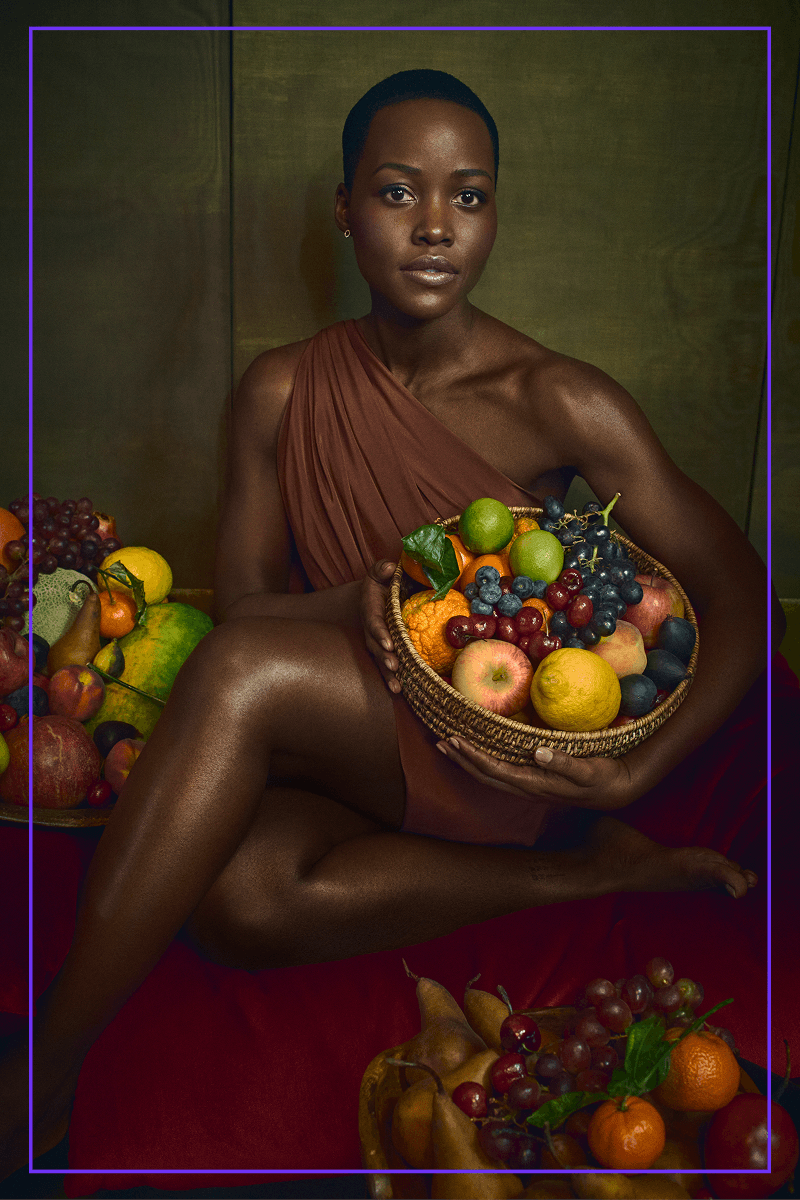
Post an image with fruit representing the invisible burden you carry using #MakeFibroidsCount. Your courage helps the next woman feel less alone.

Create your own fundraiser for fibroids research, and invite your friends and family to give in your honor. Your story can drive the change we long to see. Every dollar helps.
Leaderboard
34
Lupita Nyong'o
I’m choosing to Make Fibroids Count. Join me!

Poly Gogia
I’m Turning My Fibroid Journey Into Support for Others

Joel Bervell
I'm choosing to Make Fibroids Count. Join me!
Erika Swilley
I'm choosing to Make Fibroids Count. Join me!

The White Dress Project
The White Dress Project is Making Fibroids Count. Join us!

Misha Japanwala
We're choosing to Make Fibroids Count. Join us!
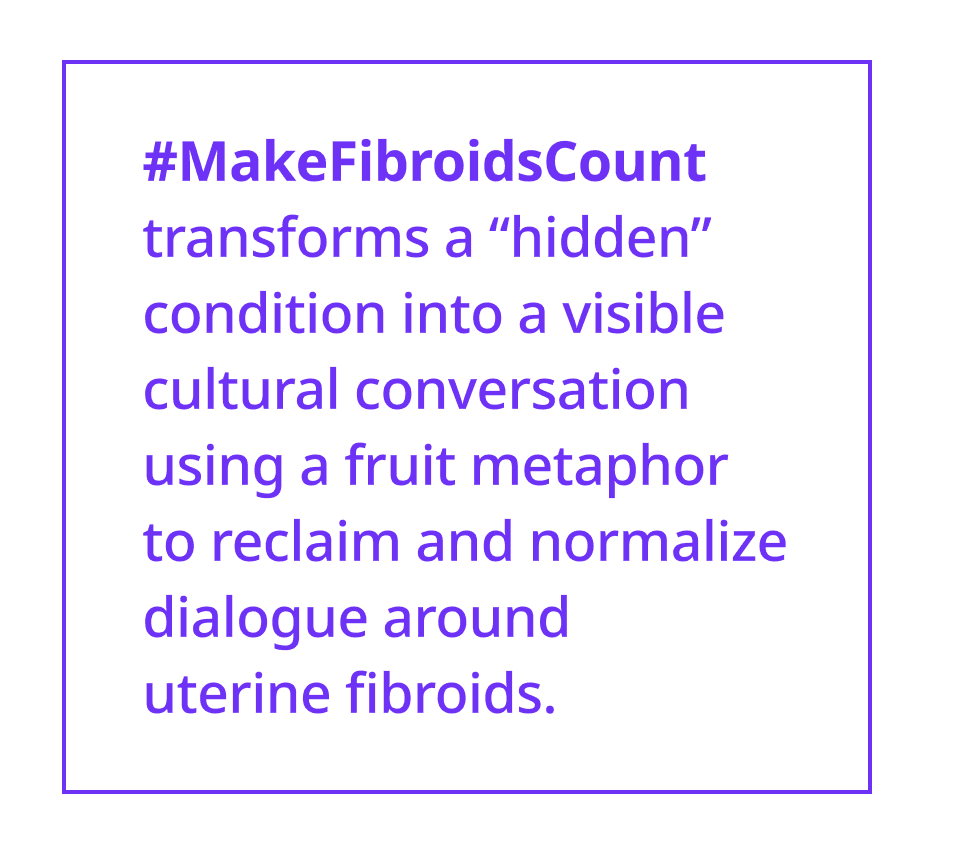
Blueberry, grape, lemon, orange, grapefruit, cantaloupe. But let’s be clear: the comparison is convenient but the consequences of these growths can be very severe. These aren't fruits we chose to harvest; they're unwanted growths that can cause debilitating pain, heavy bleeding, infertility, and a profound loss of control over our own bodies. By reclaiming the fruit metaphor, we're making visible what has been invisible, transforming medical jargon into a symbol of resistance and solidarity.
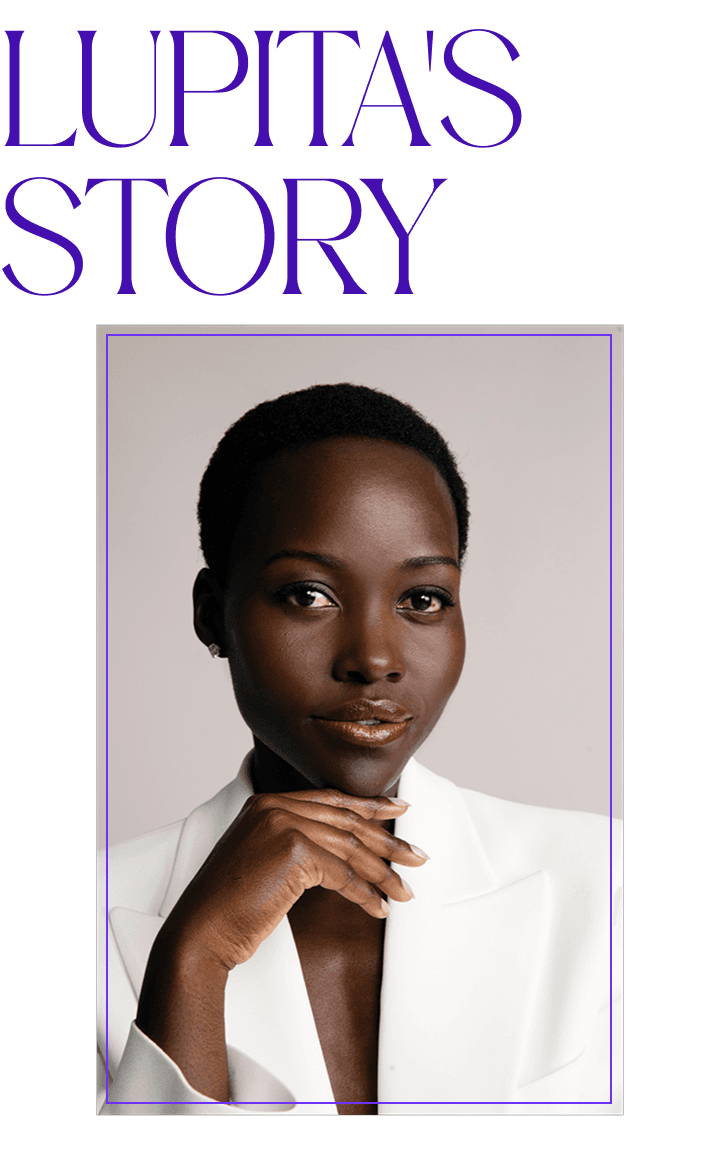
In 2014, I won an Academy Award, one of the highest honors of my career. That same year, I discovered I had uterine fibroids. While the world celebrated my achievement with me, I was privately grappling with a threat to my reproductive health that I never saw coming.
The diagnosis left me with countless questions: What were fibroids? How did I get them? What signs should I have recognized? What were my treatment options? How could I prevent them from returning? But what shocked me most was that very few of these questions had clear answers. Despite affecting millions of women, uterine fibroids remain severely under-researched.
When I received my diagnosis at age 31, I was offered only two options: invasive surgery to remove them or live with the pain. I chose surgery and had a myomectomy in November 2014. When I asked my doctor how to prevent them from returning, her response was devastating: "You can't. It's only a matter of time until they grow again."
This moment crystallized something profound for me. I realized that as women, we are conditioned from an early age to expect suffering, and to endure it in silence.
When we hit puberty, we are taught that periods mean pain; cramping, clotting, discomfort are all "normal." So when my periods became more painful, I didn't question it. When they doubled in length in my twenties, I accepted it. When severe clotting began, I still didn't sound the alarm. I had been taught that pain was simply part of being a woman.
The medical system reinforced this assumption. During annual gynecological exams, fibroids were barely mentioned. It wasn't until I was experiencing debilitating pain that I finally insisted my doctor listen. A simple ultrasound followed by an MRI revealed nearly 30 fibroids.
Ten years later, I am facing the same battle, this time with twice as many fibroids. But something has changed: I'm no longer willing to suffer in silence.
When I began sharing my story privately, something extraordinary happened: I discovered that women everywhere - friends, colleagues, acquaintances, were fighting the same battle. We had all been struggling alone with something that affects most of us. We felt isolated and unique, yet we were part of a massive collective experience.
This realization was both heartbreaking and empowering. What if we stopped suffering in silence? What if we spoke up and shared our stories? What could we accomplish together?
When something affects 8 out of 10 women (with Black women impacted at higher rates) and we're still caught off guard by it, that's not individual bad luck – that is systemic failure. There's something deeply wrong when a serious, mysterious health problem is so common that it’s treated as casual, as inevitable.
We must reject the normalization of female pain. We need to stop treating this massive issue like a series of unfortunate coincidences. We have to study women’s health and prioritize this high-burden condition that has never been comprehensively examined.
I envision a different future: one with early education for teenagers, better screening protocols, robust prevention research, and less invasive treatments for uterine fibroids. But transformation begins with understanding, and understanding requires research.
That's why I've partnered with the Foundation for Women's Health, to turn this vision into action, to transform our reality through research and advocacy.
I'm speaking up because silence serves no one. The presence of pain is a signal that something must change. Let's hear that signal. Let's amplify it. And let's work together to eradicate the pain.
We deserve better. It's time to demand it.
The Foundation for Women’s Health was created to fund the gaping holes in women’s health research. While many wonderful institutions exist to address specific research areas in women’s health, FWH is looking at the funding landscape holistically across the entire female life cycle to identify gaps in knowledge and then strategically fill them. We identify the areas where funding opportunities do not exist so that we can efficiently fill gaps in women’s health research without duplication of those areas that are already well-funded. FWH disseminates findings not only through medical and academic channels, but also through traditional news media and social media, to ensure that novel findings are translated into practical applications to improve women's health today.
Learn More →